artist davide ragazzi’s
WIP exhibitions
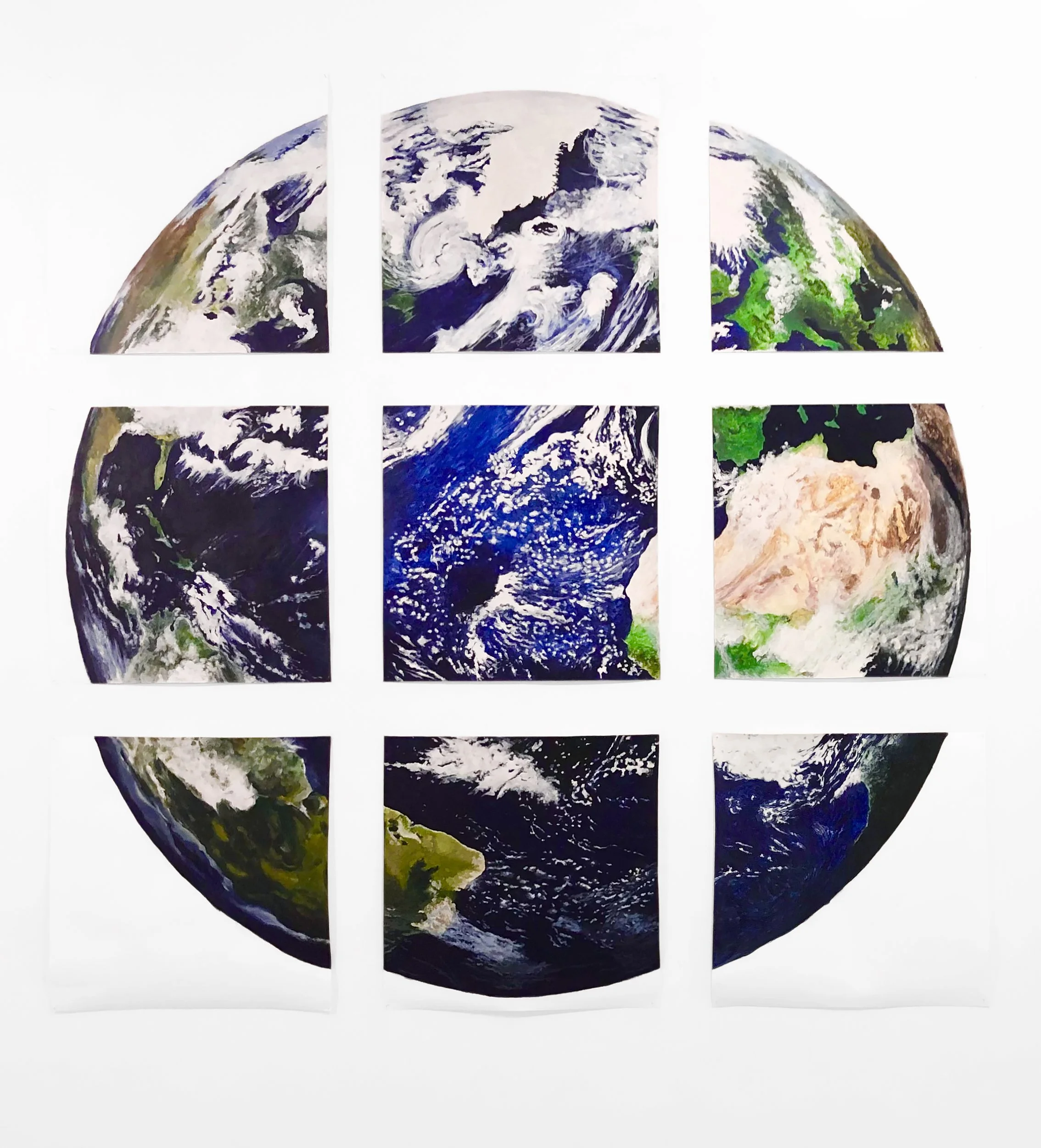
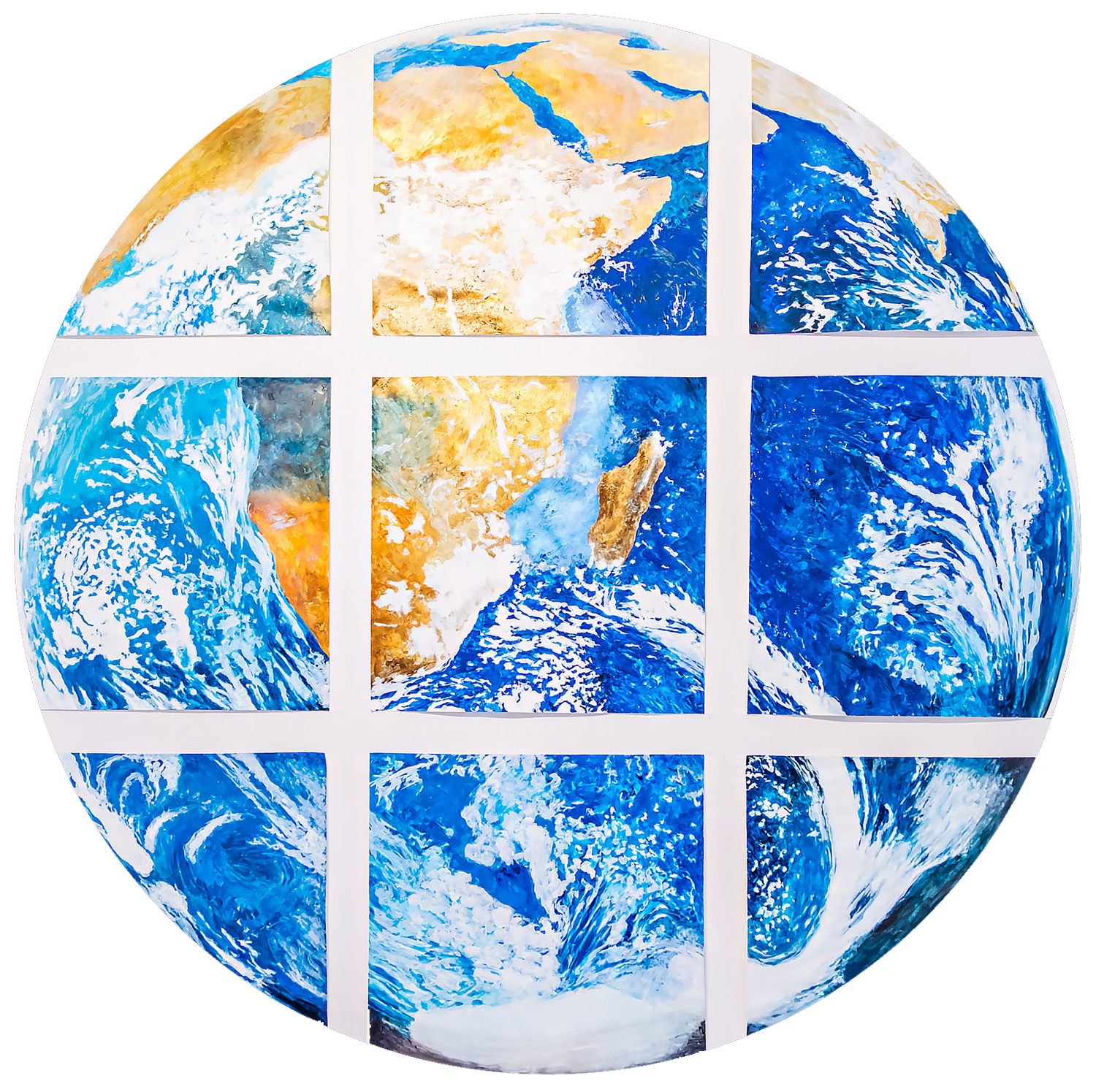
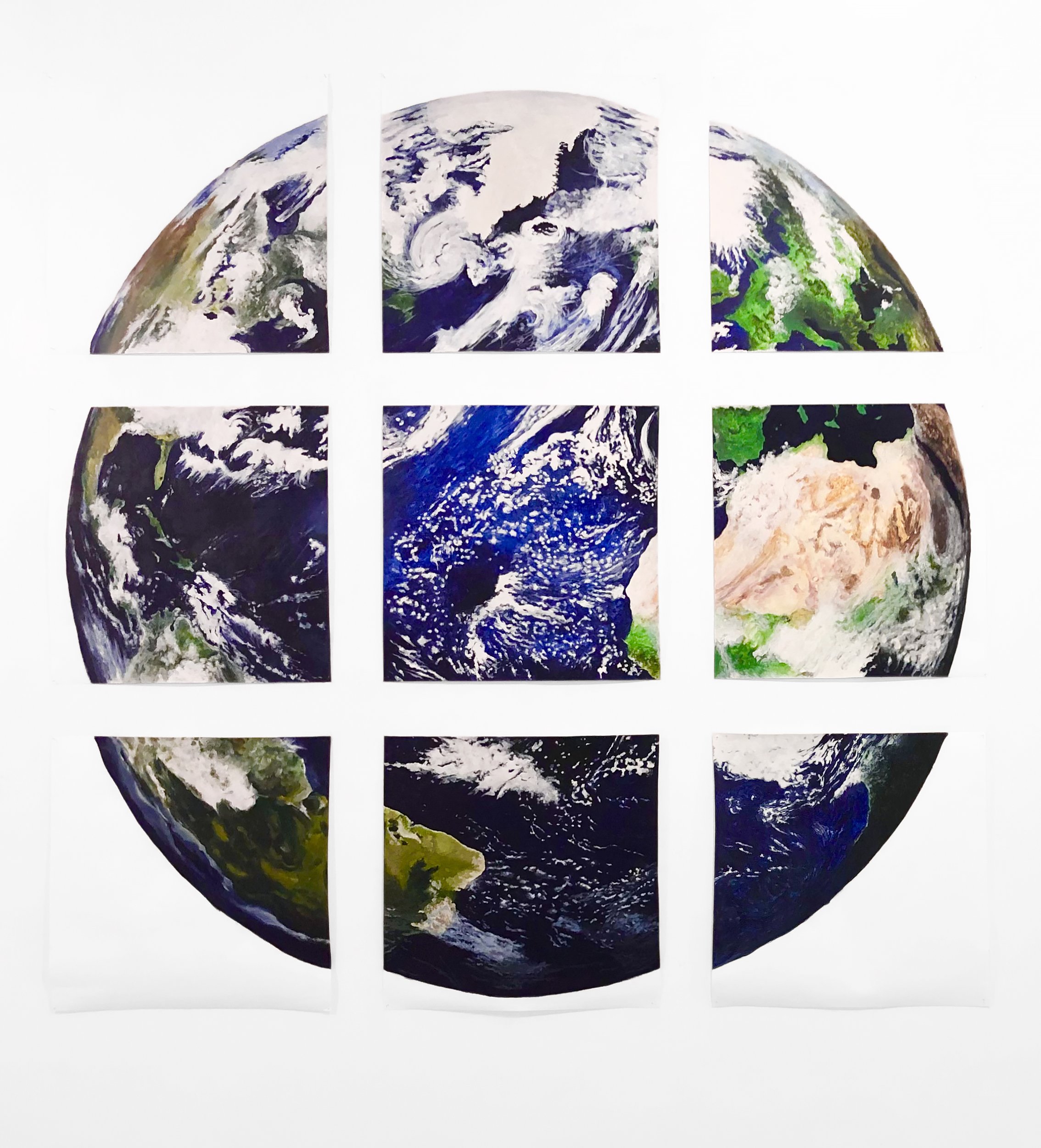
Davide Ragazzi, We Earth, 9 painted modules on paper, acrylic color, Genoa, Italy, 2025
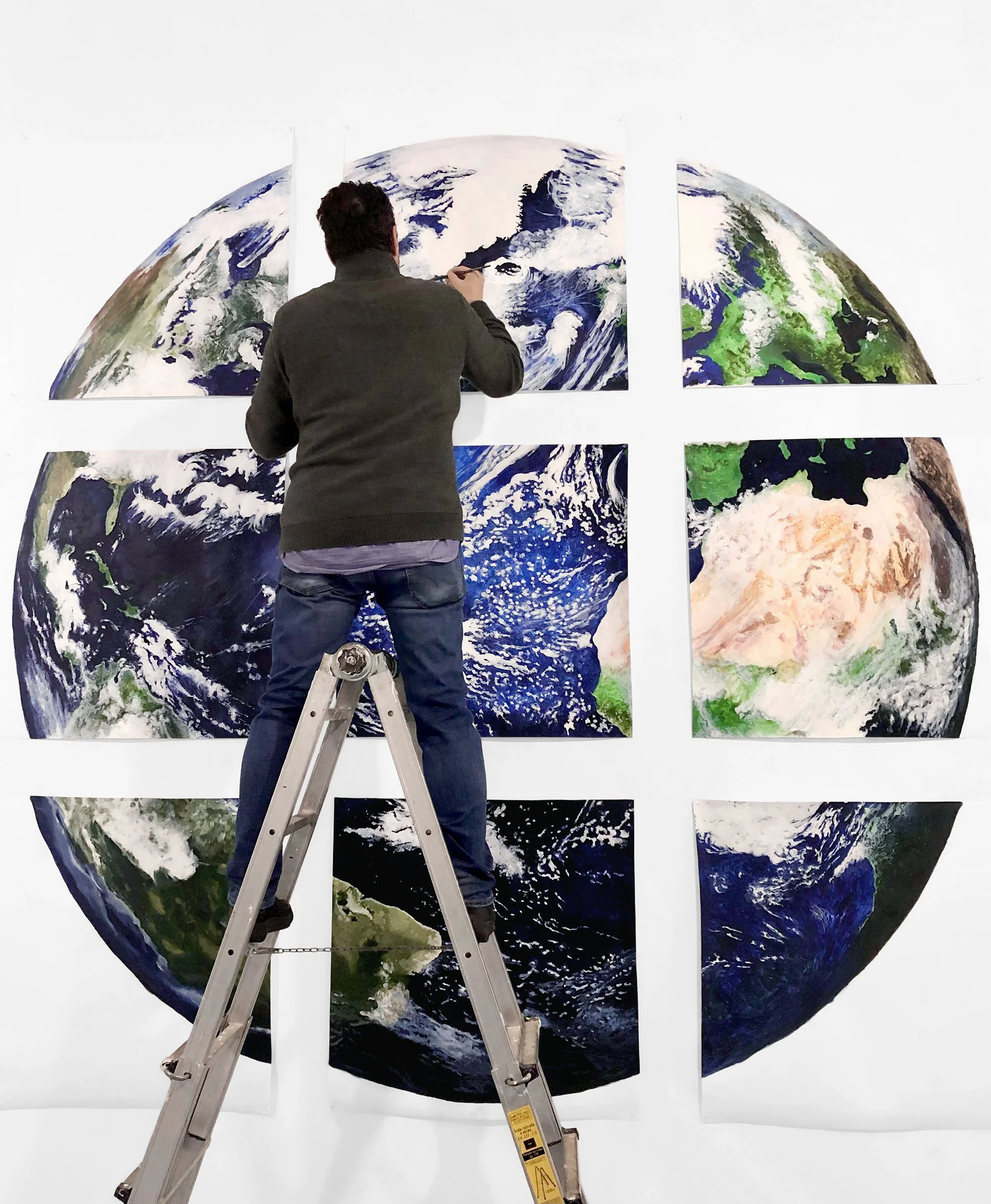
Davide Ragazzi artist completing WIP We Earth in art gallery, Genoa, Italy, 2025
Since 2004, artist Davide Ragazzi has used the “work in progress” formula during Open Studio Days, showcasing ever-evolving works, explaining his distinctive technique and creative process. During the Open Studio, often accompanied by workshops, the goal is to foster direct interaction with the public, engage them in the creative process and facilitate the understanding and study of contemporary art.
Since 2020, the artist, together with the studio curator, has been organizing work in progress (WIP) painting exhibitions in various cities. These exhibitions showcase the art process and offer a dynamic, engaging and exciting narrative of artworks in their various stages of creation. The development stages of the artworks coexist with finished works, recounting the artist’s art research, the evolution of concepts and the decision made. Initial charcoal sketches, studies and color proofs are exhibited alongside finished works, broadening the narrative of the artwork and its study. WIP exhibitions are an opportunity to showcase phases of the work that usually no one can see: creative moments that “live” for a short time, then erased or covered by subsequent phases of the work. The aesthetic of the “unfinished” capture spontaneity and emotion. The audience at these events, who can follow the art’s journey from initial concepts to the finished work, appreciates authenticity, transparency, a sense of belonging to a community, emotional involvement, the idea of “experiencing art” in the present moment and the feeling of being privileged spectators of art secrets.
Davide Ragazzi’s most recent WIP exhibitions were: We Earth (Genoa, Italy, 2025), Future Earth (Venice, Italy, 2022) and Cosmo Art (Genoa, Italy, 2020). In all the exhibitions, the artist showed himself to the public painting alone or with a team of young assistants. The young people’s contribution varied across the three exhibitions. In Cosmo Art, the young people attended a painting class and painted a subject of their choice in the front of the public. In the other two exhibitions, the young people worked as artist’s assistants to create large-scale installations using pictorial modules. In Future Earth, in addition to the young team, exhibition visitors also participated, to a minimal extent, in the creation of the work. All three exhibitions began with parts of the work already started (preparatory drawings or already painted sections) and the artist completed the installations during the exhibition. The preparatory drawing phase was exhibited for a deliberately prolonged period of time, so as to dedicate part of the exhibition time to the drawing, underlining its importance and creating a dynamic exhibition.
In Future Earth, there were three painting installations set up on special structures: lightweight self-supporting metal structure arranged in a U-shape at the center of a multipurpose space. On the opening day, one of the installations, already completed, was set up on one of the metal structure. An atelier was set up behind one the free structures and there the artist and the exhibition team painted other 2 installations, module by module, starting from a ready charcoal drawing. Once the colors have dried, the modules were set up on the metal structures and by the middle of the exhibition the three painting installations were completed.
WIP EXHIBITION We Earth
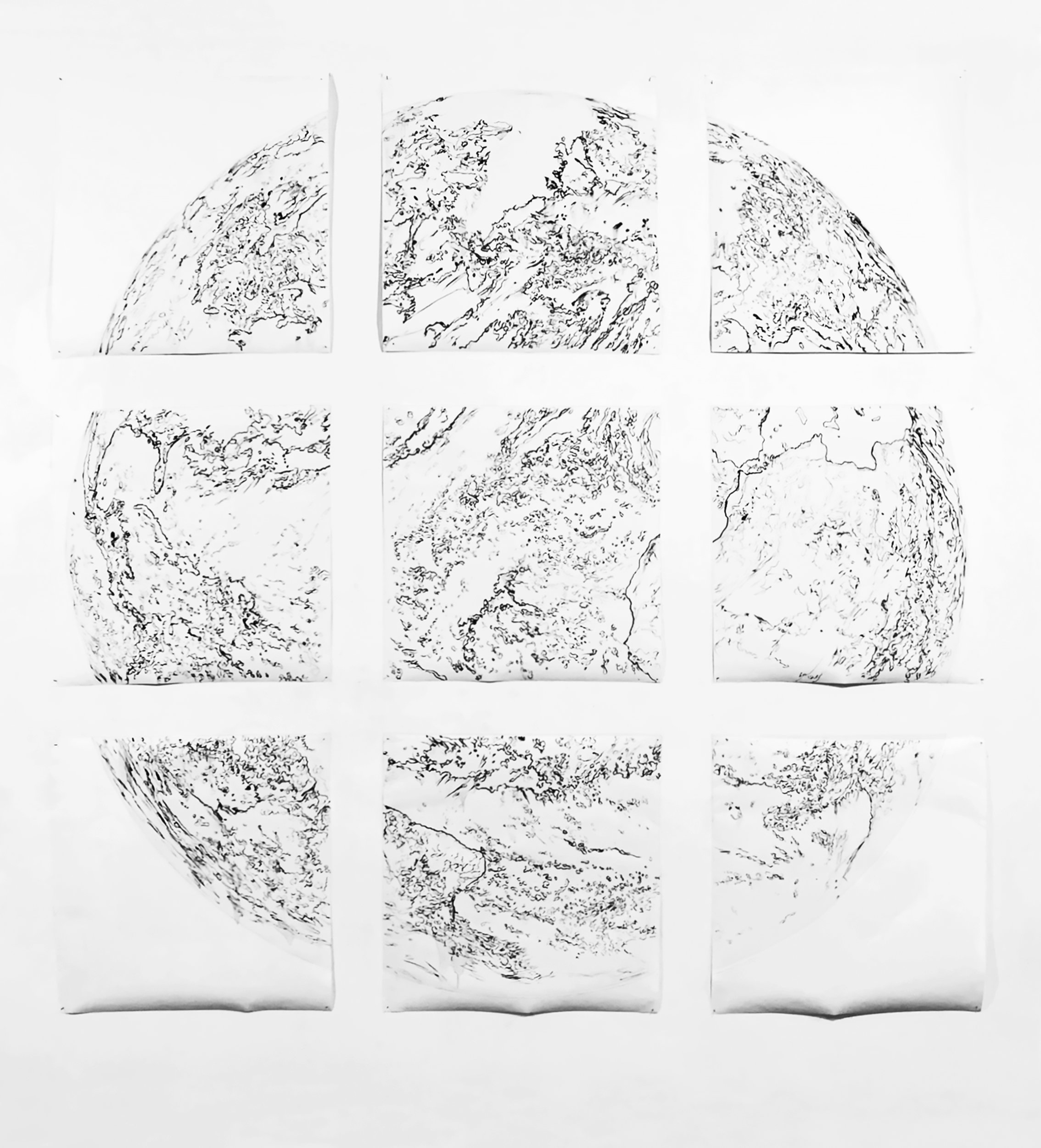
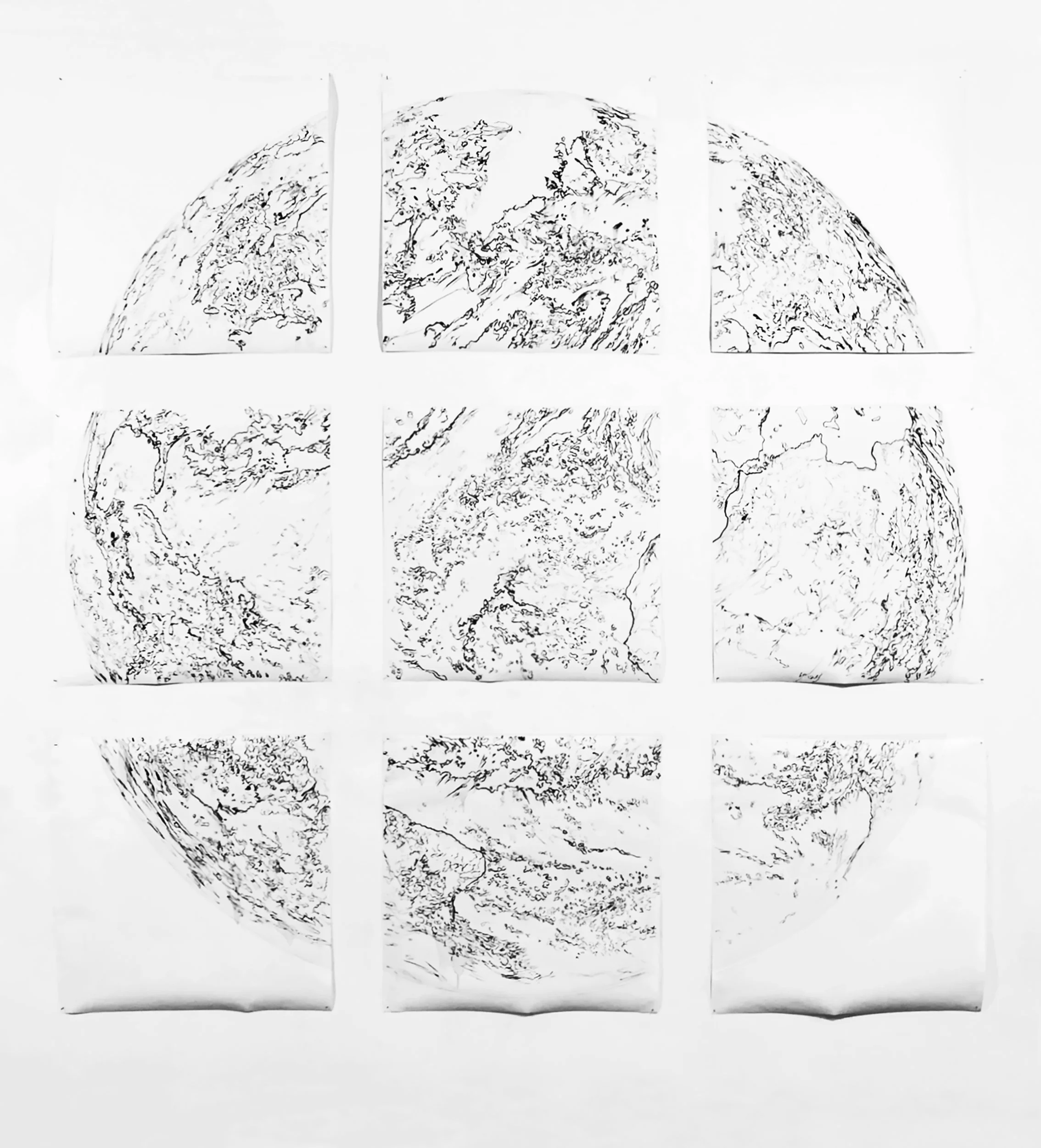
WIP We Earth in art gallery, phase 1: 9 paper modules with charcoal drawing
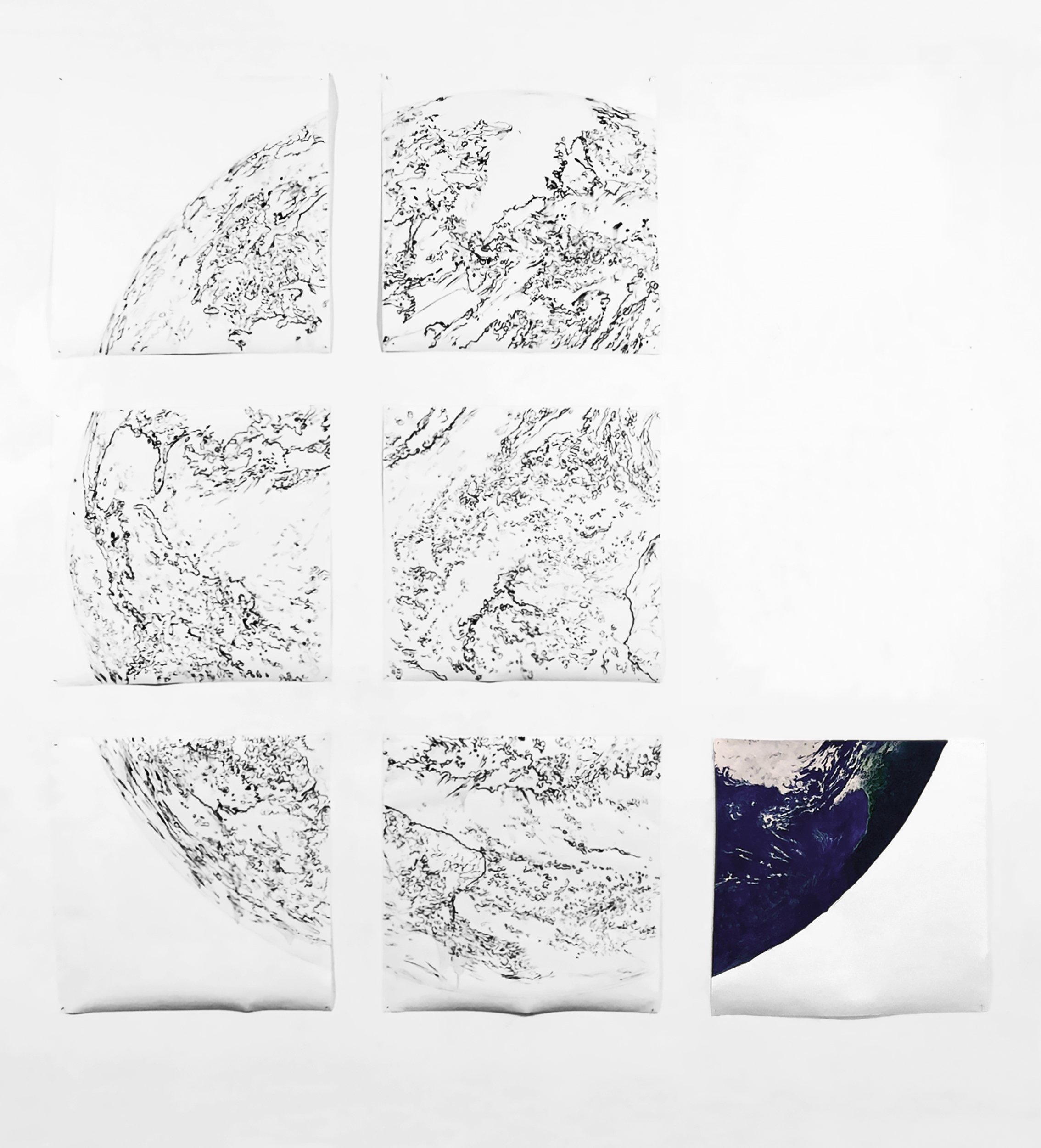
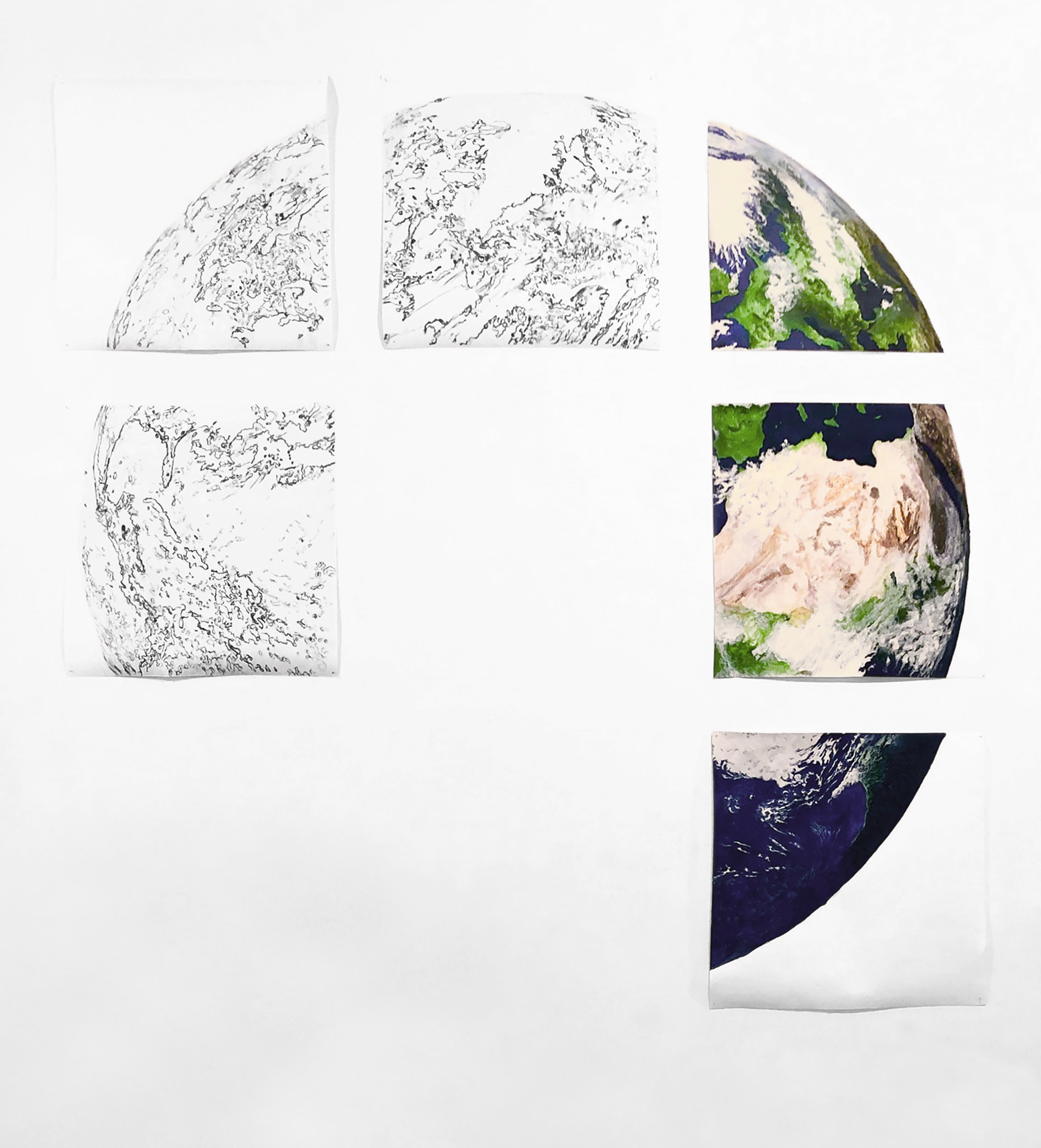
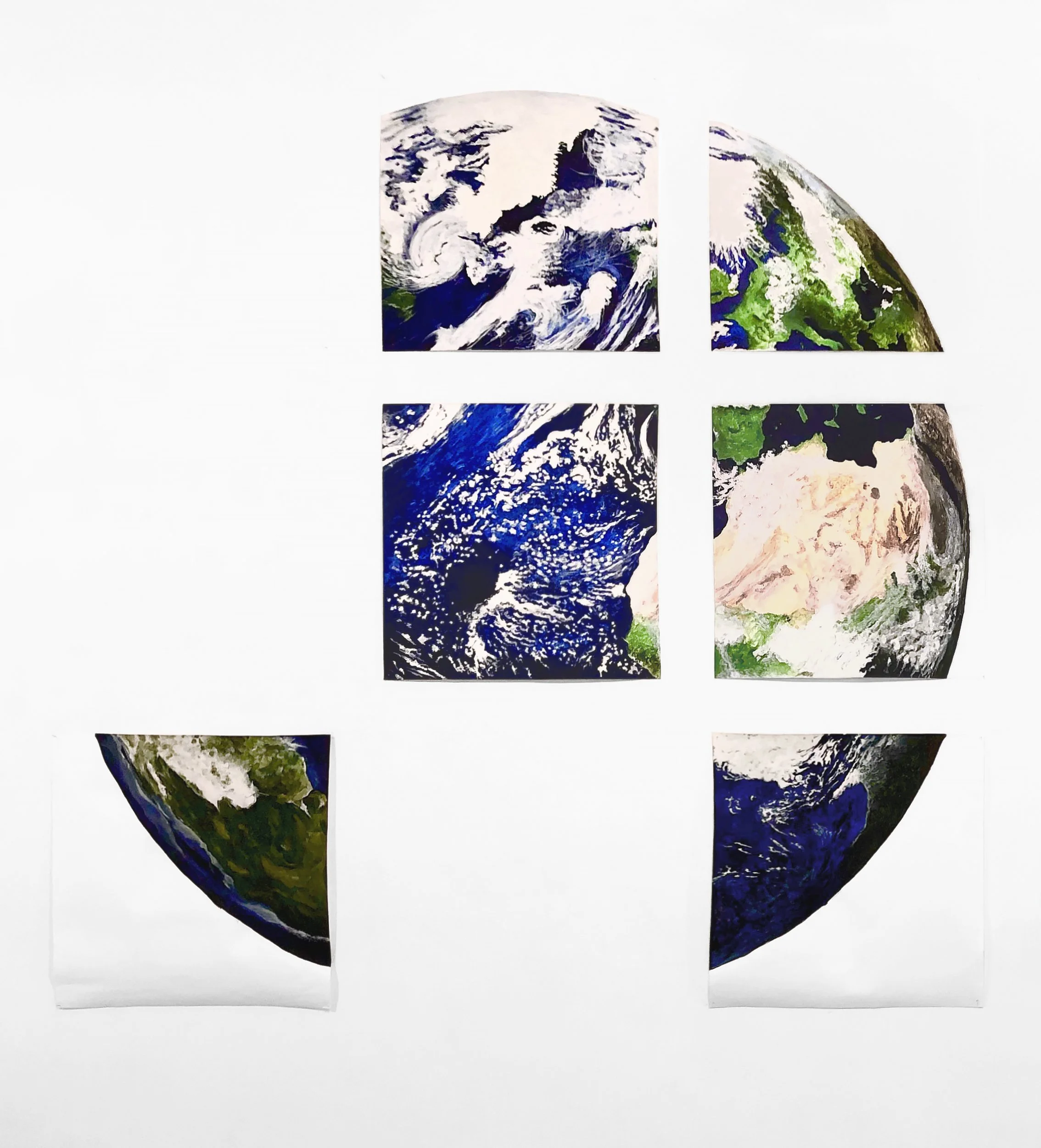
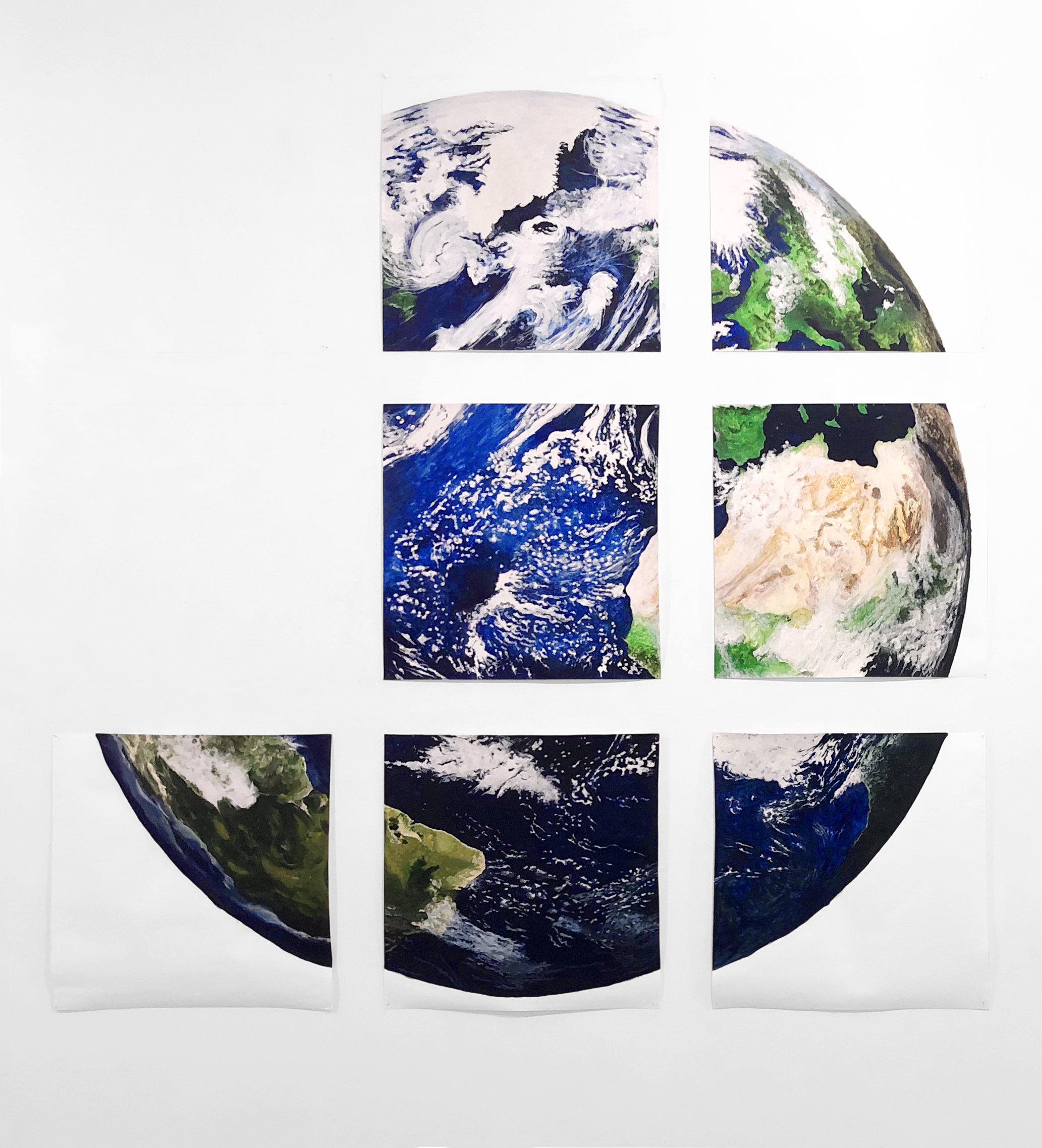
In WIP We Earth exhibition, on the opening day, it was set up the preparatory phase of the charcoal drawing of a modular installations on the wall of an art gallery. During the exhibition, two or three modules at a a time were detached and transported to the artist’s studio, were the artist and the exhibition team completed the painting phase, while the other drawn modules and the empty wall spaces welcomed visitors to the exhibition. Once painted in the studio, the modules were returned to the gallery wall, while others were detached and retuned to the artist’s studio for the completion of the work.
As the work progressed throughout the exhibition, the coexistence of the charcoal drawing, the empty spaces and the painted modules gave rise to 6 new temporary works, corresponding to six phases of dynamic work and painting of the different modules. Each of these works “lived” for 2 or 3 exhibition days, allowing visitors to meditate on three-dimensional and time actions performed by the artist. At the end of the exhibition, all the modules were set up in the complete pictorial phase, but the memory of the 5 previous works remains present in the documentary photos.
In WIP We Earth exhibition, the artist conceptually explored his work, intensely engaging the visitor and leading them to a deeper level of understanding of the study and creation process of his works. For the first time in his research, the artist “drained” the process of creating and exhibiting his works, creating a conceptual intervention through the movement of the work and the use of empty spaces on the walls. In these voids, it was possible discern a compositional and spatial discourse, but also to interpret a symbolic absence: that of artists who have increasingly less space available for cultural and artistic projects in the cities where they work. Often forced to scale back within urban space, they work exclusively in their studios and have fewer opportunities to exhibit their work on public. Contemporary society is changing rapidly and also gallery walls are emptying. The artist’s conceptual intervention also defines the importance of timing and execution technique as elements to be restored when viewing and studying a finished work.
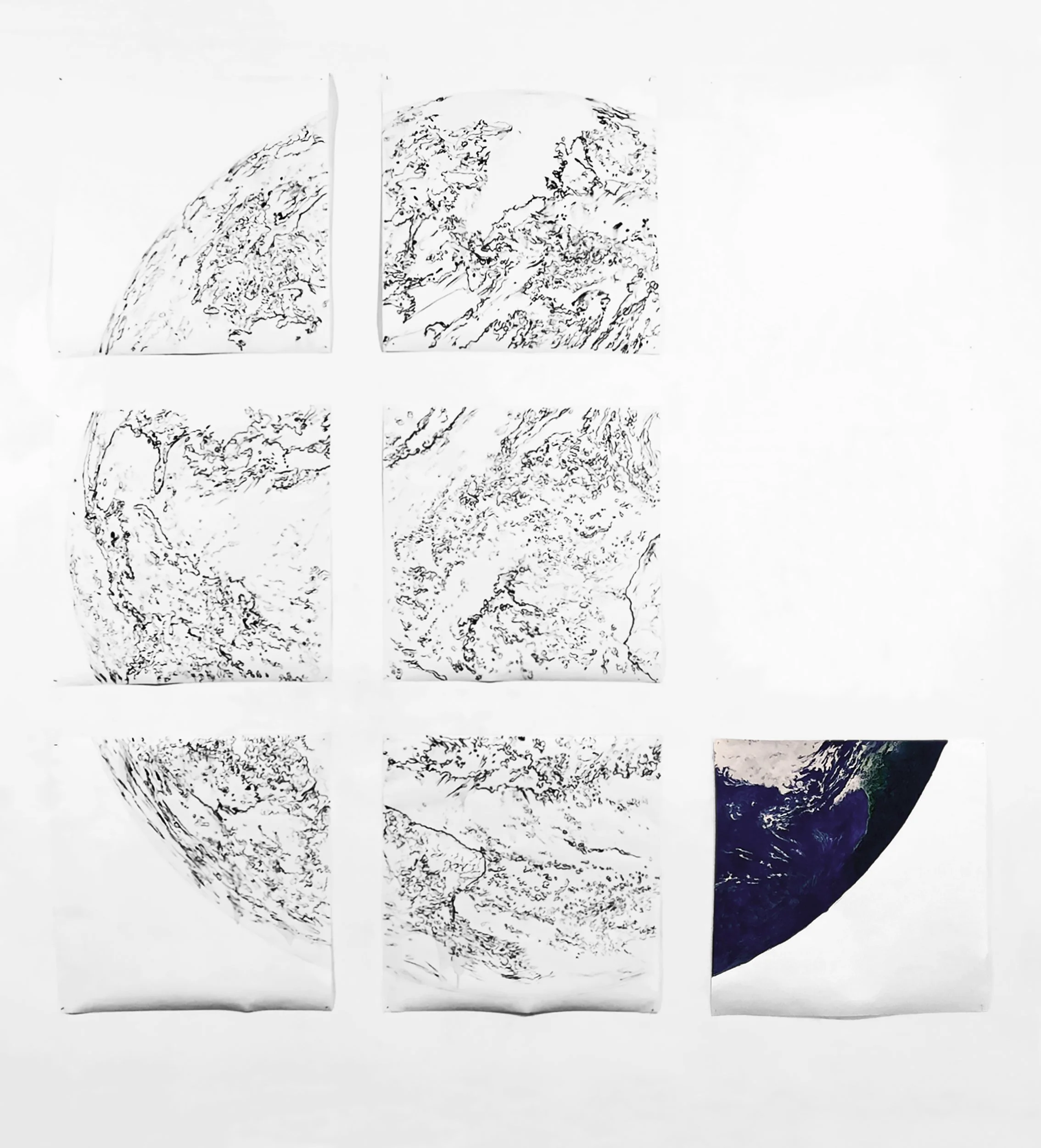
WIP We Earth in art gallery, phase 2: 6 modules with charcoal drawing; 1 painted module, 2 empty spaces
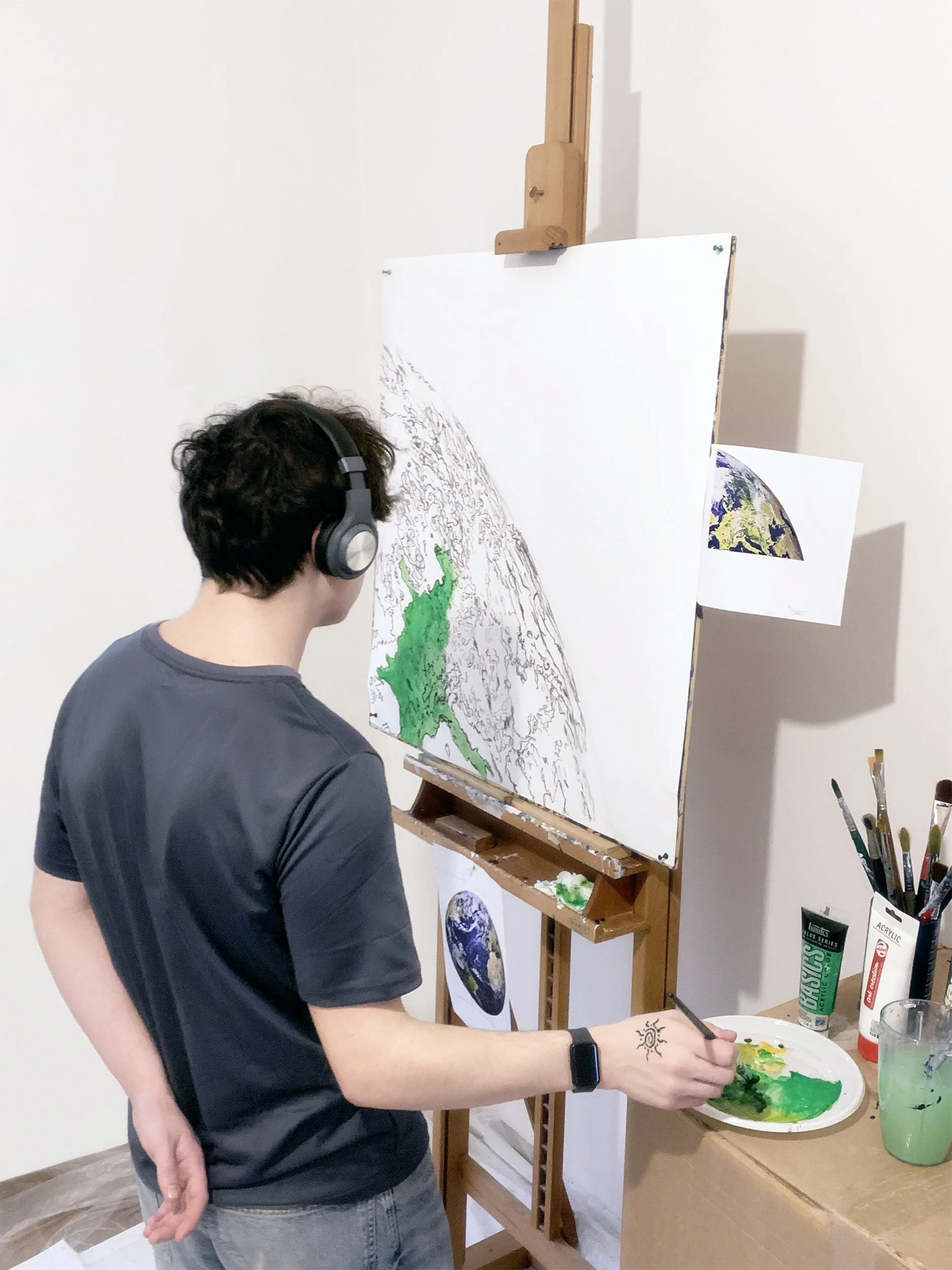
WIP We Earth in art studio: young assistant painting 1 module
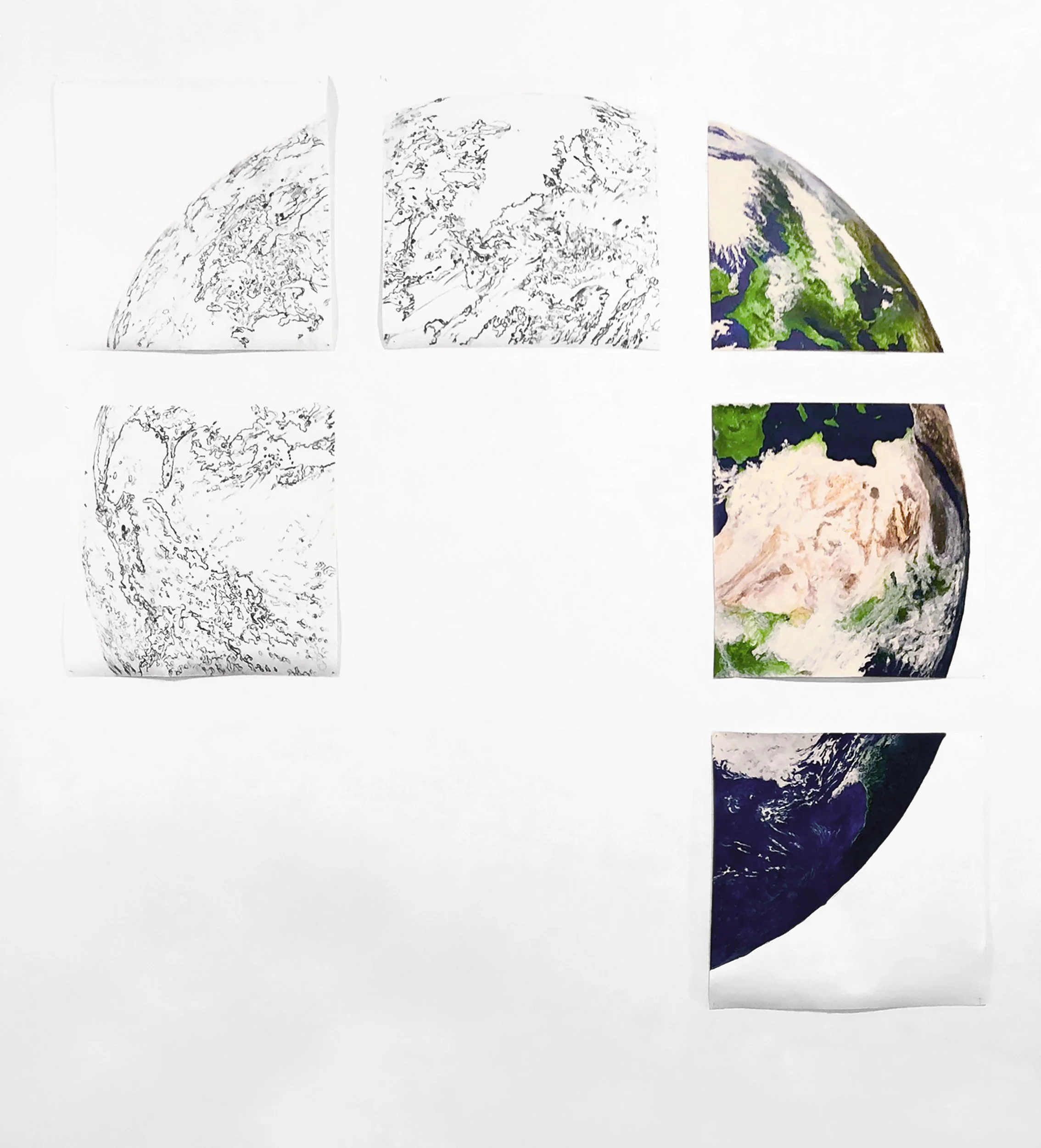
We Earth: WIP Phase 3; 3 modules with charcoal drawing; 3 painted modules; 3 empty spaces; in art gallery
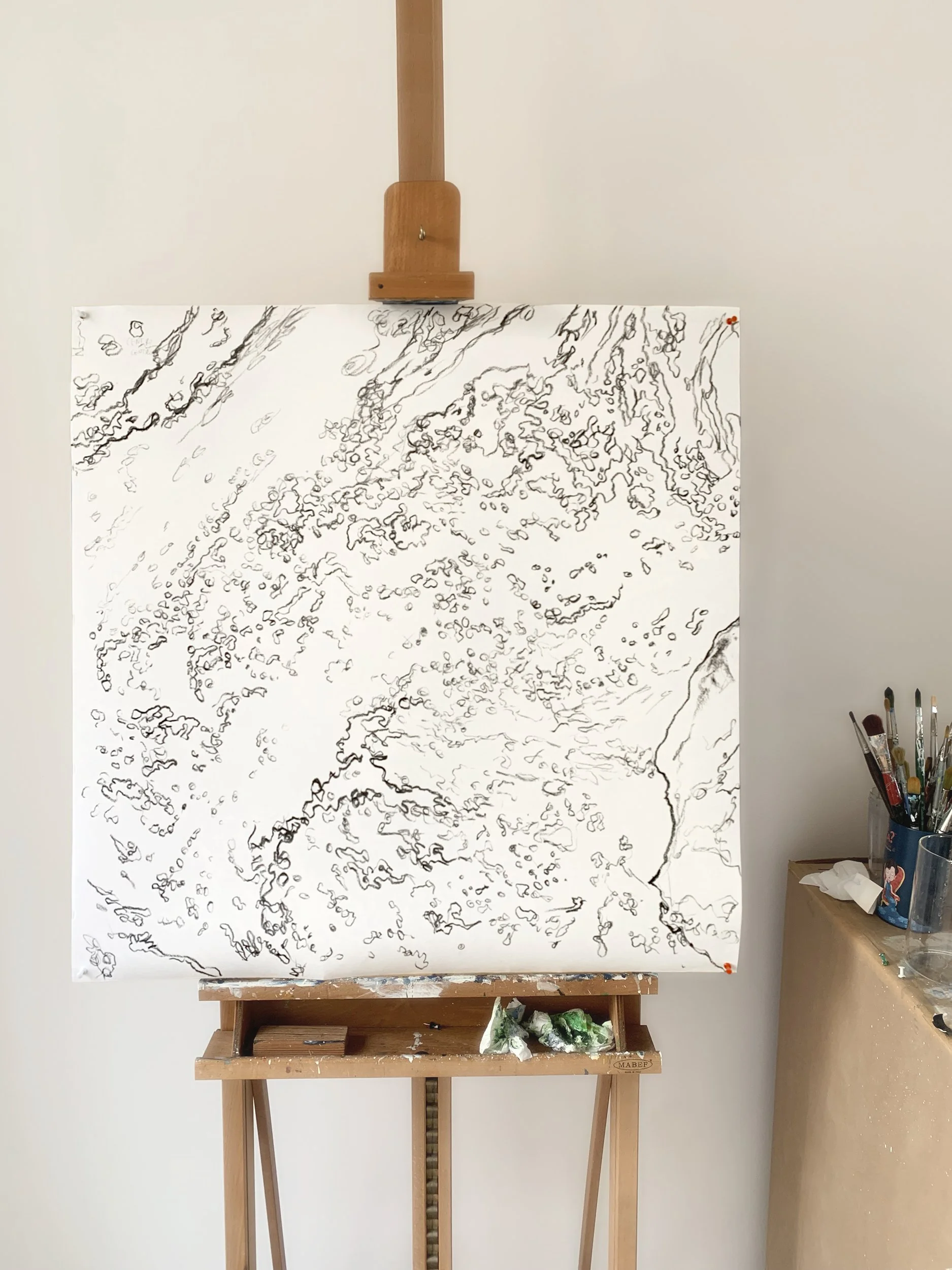
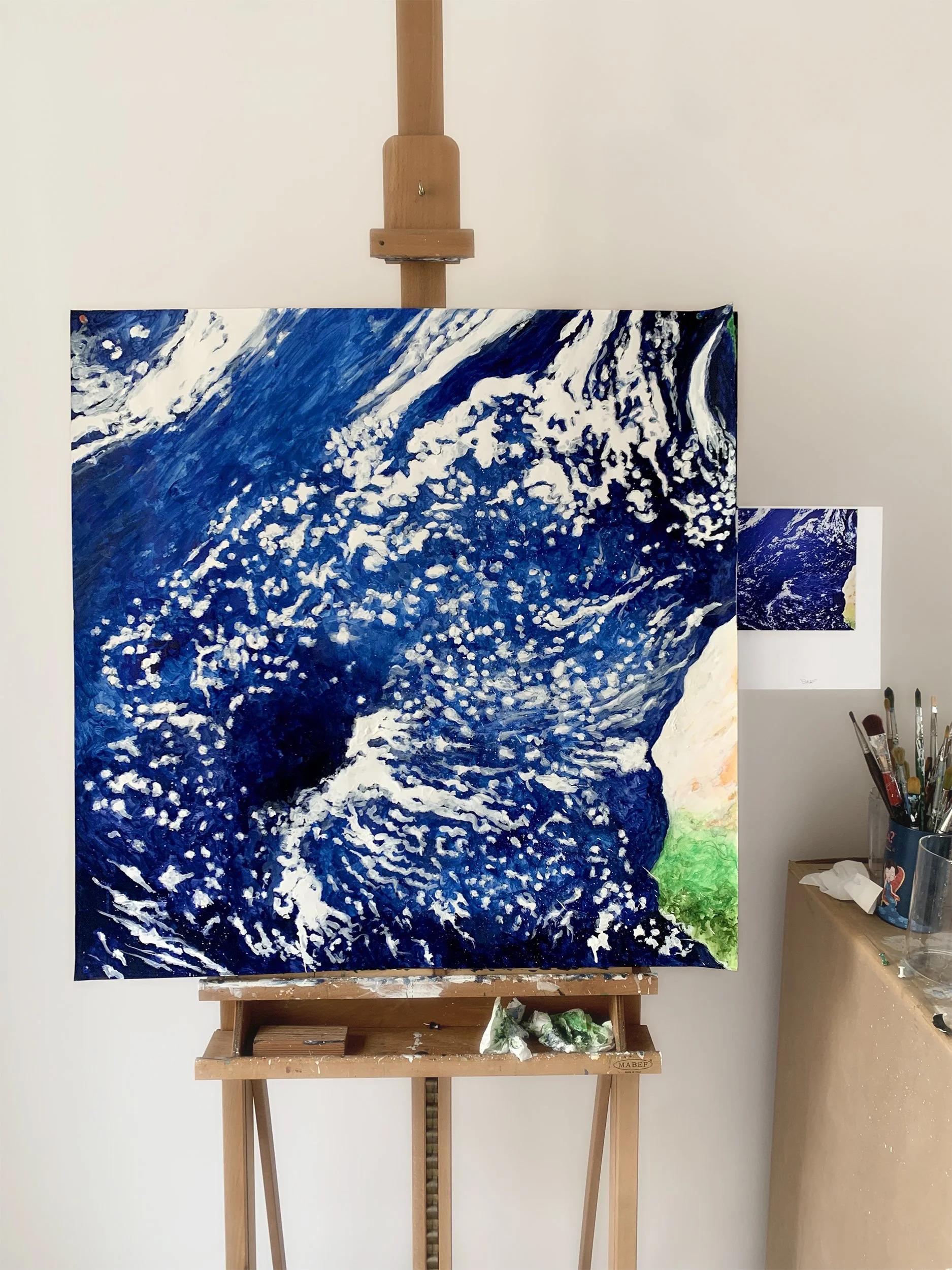
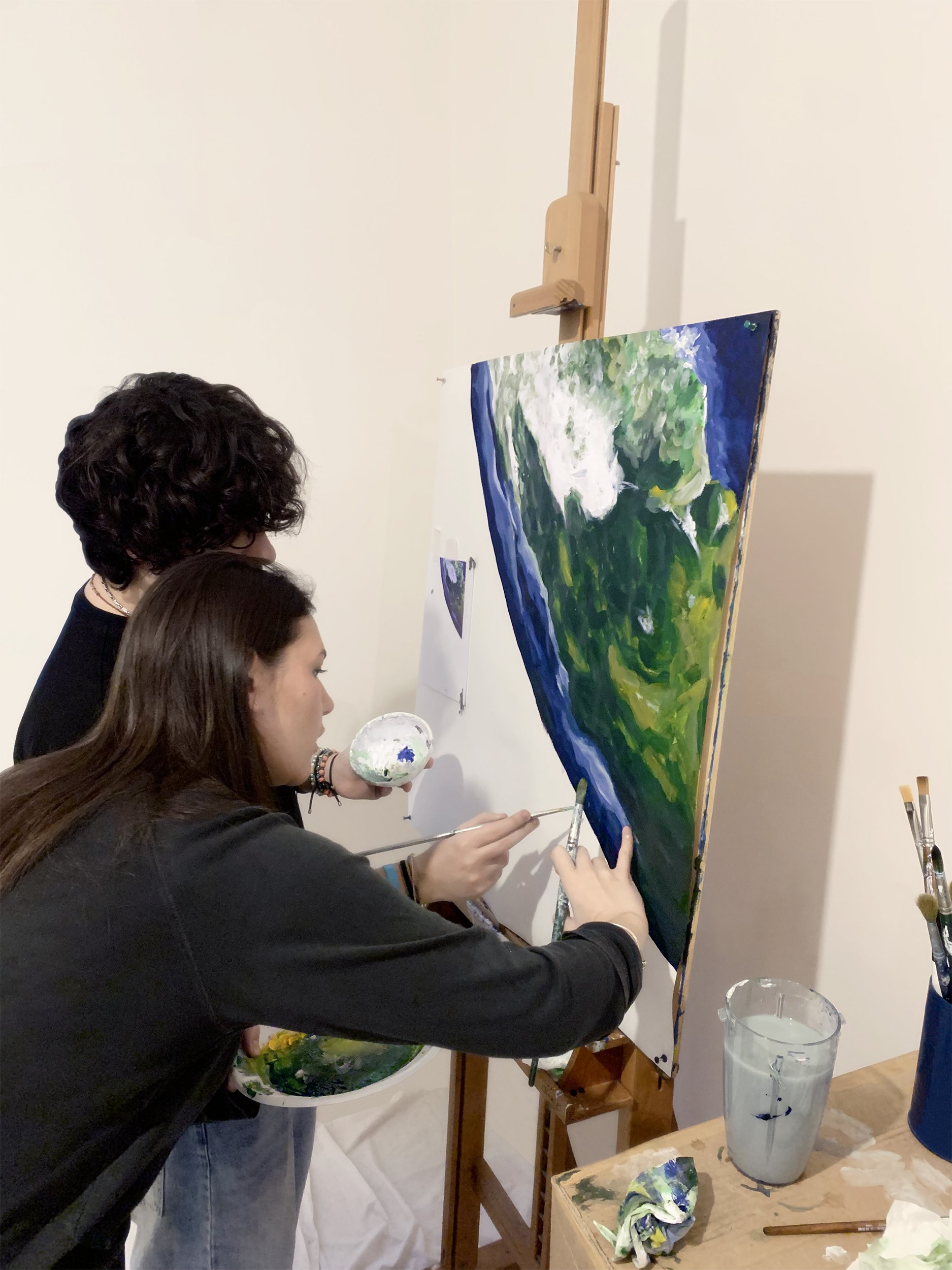
WIP We Earth in art studio: 2 assistants painted 1 module
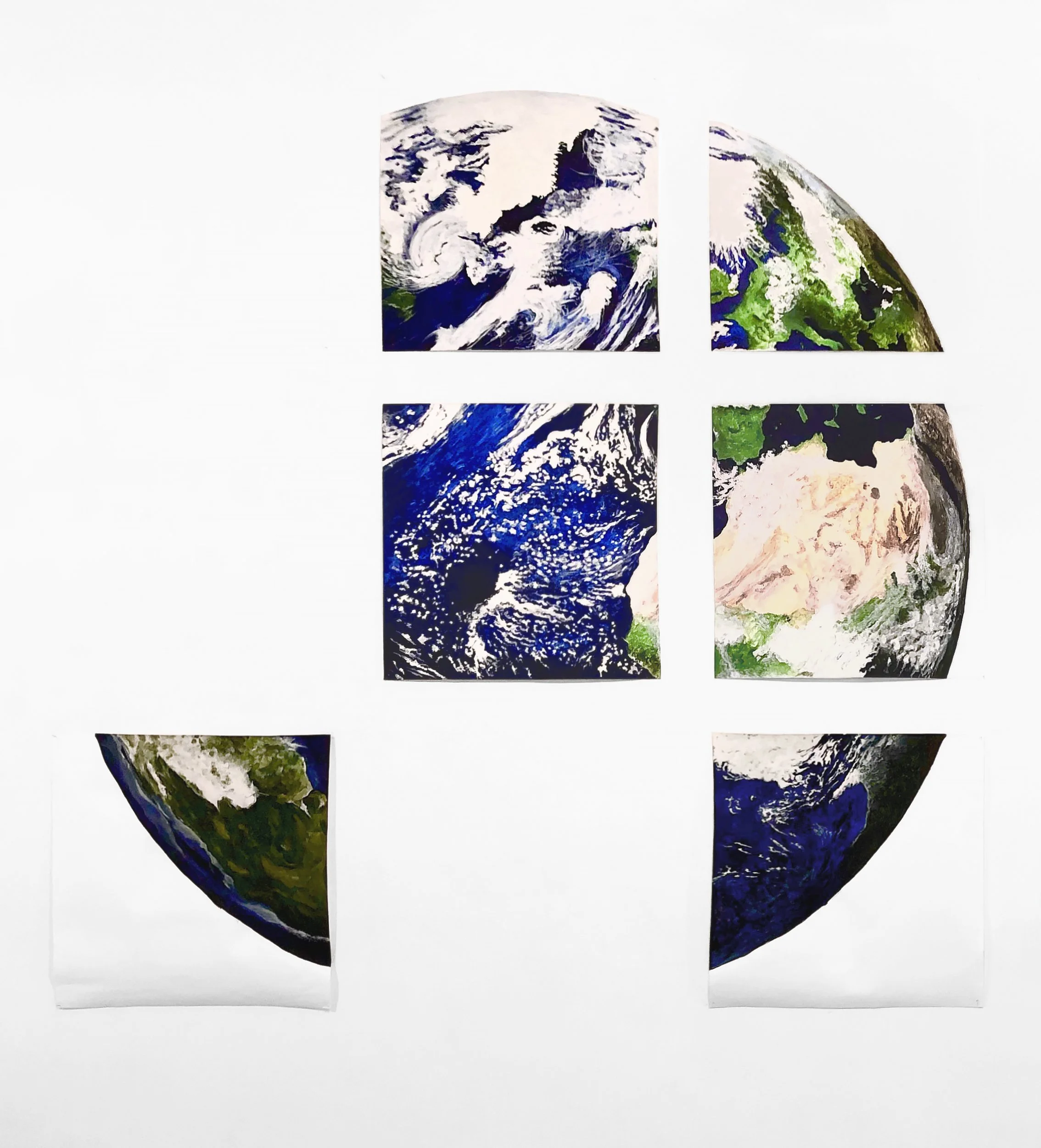
WIP We Earth in art gallery, phase 4: 6 painted modules; 3 empty spaces
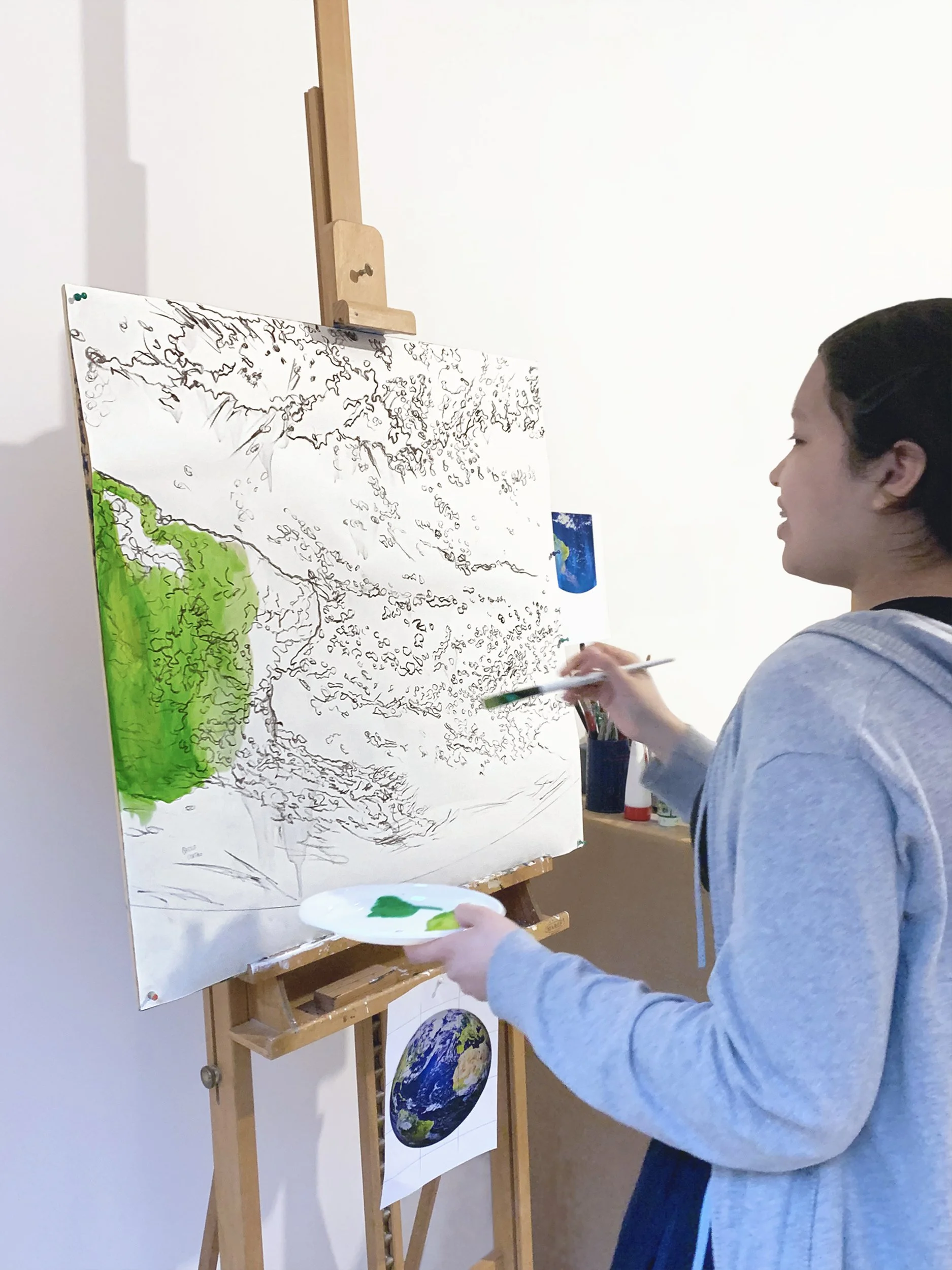
WIP We Earth in art studio: 1 assistant painting 1 module
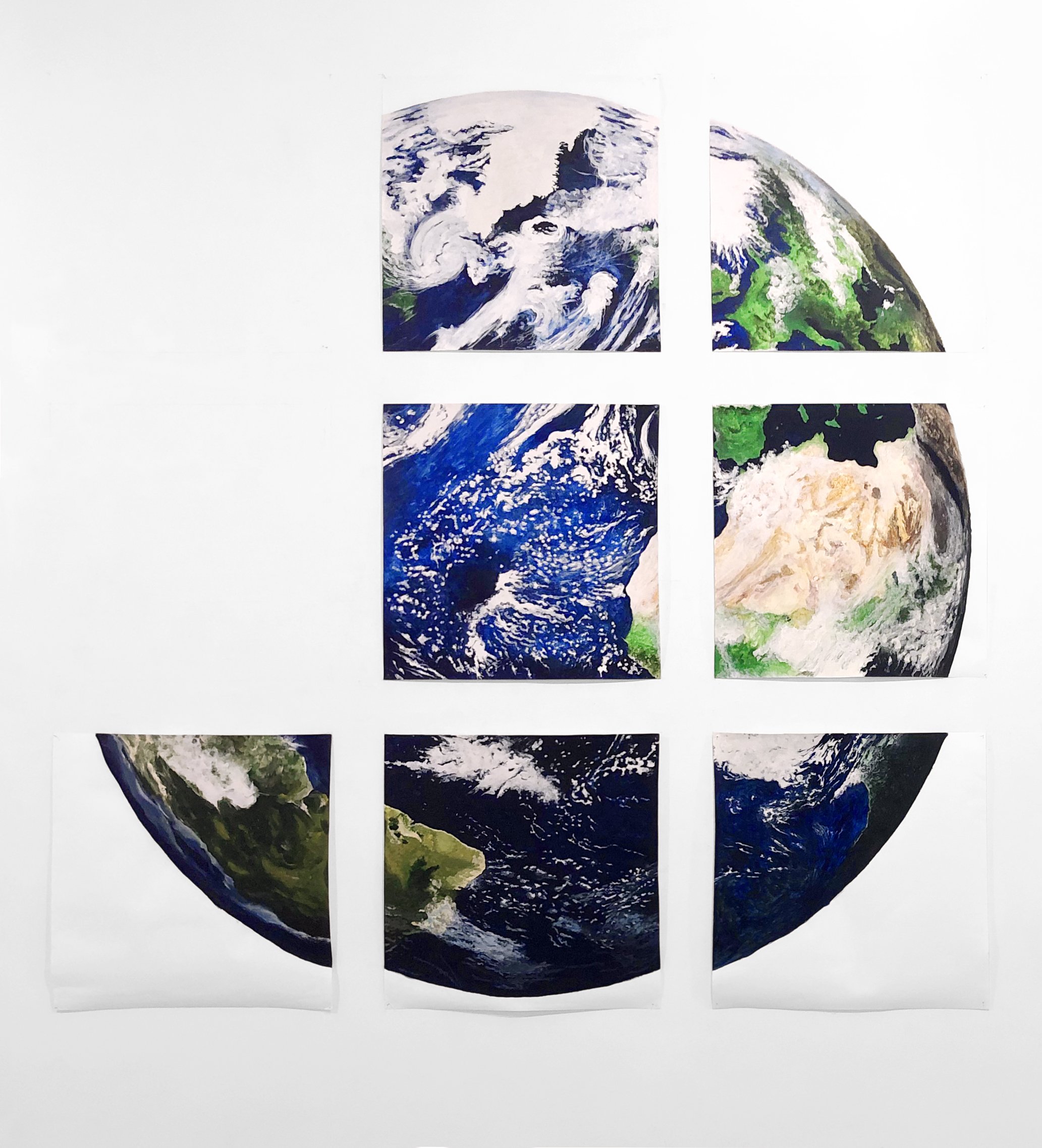
WIP We Earth in art gallery, phase 5: 7 painted modules; 2 empty spaces
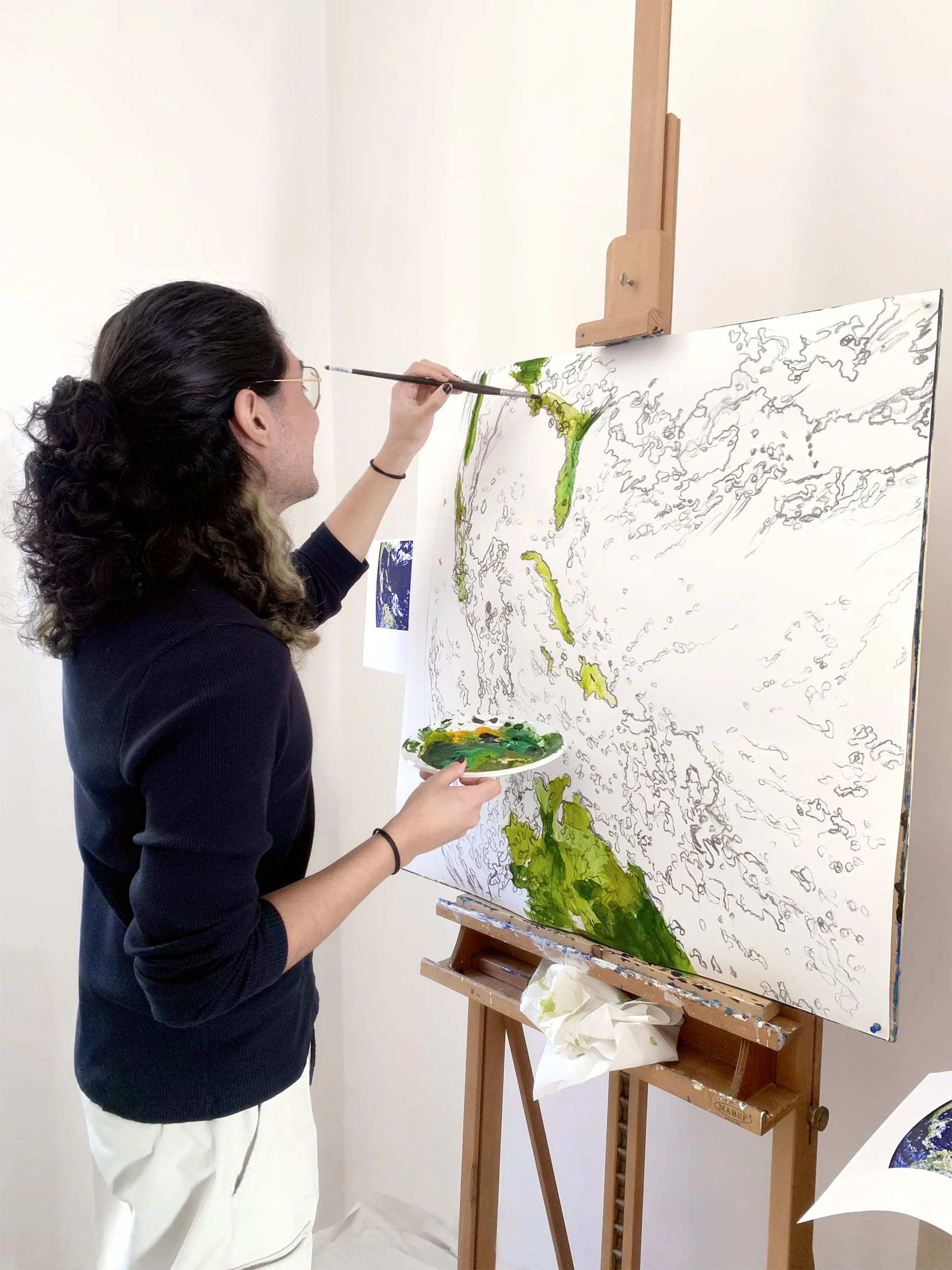
WIP We Earth in art studio: 1 assistant painting 1 module
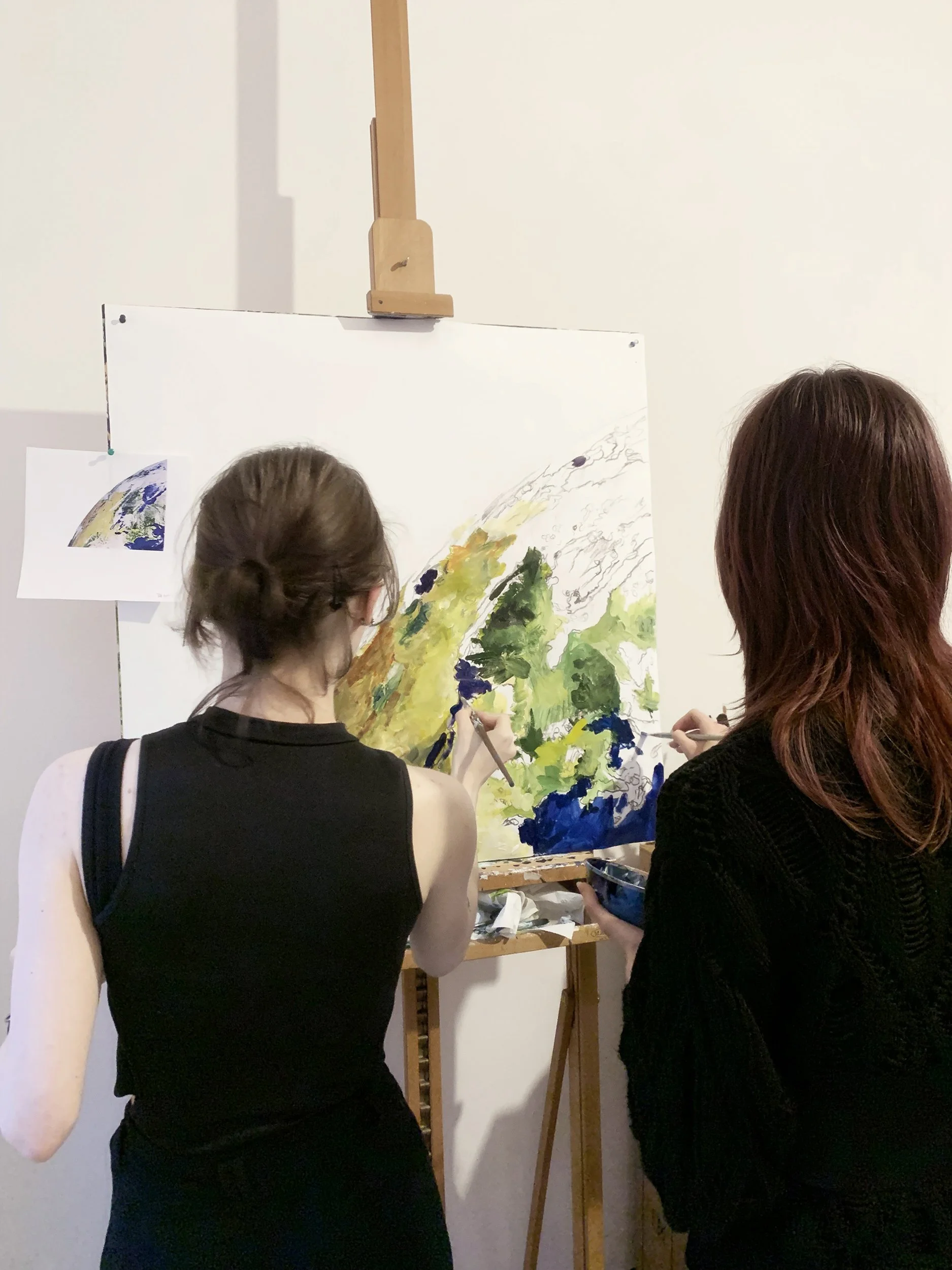
WIP We Earth in art studio: 2 assistants painted 1 module
“Designing a WIP exhibition is a complex process that requires multidisciplinary skills. The artist wants to exhibit the different phases of a work as autonomous pieces, and therefore, the exhibition space must house the final work and the intermediate works, sometimes on the same wall. Intermediate works differ significantly from the final piece in terms of medium and artistic technique, so each requires careful consideration of the space and lighting. Installation solutions must be designed to blend seamlessly into the environment to better focus the visitor's attention on the "process." The installation of an "unfinished" work must respect the artist's conceptual choices, which must be carefully considered before designing the exhibition space. The scenographic settings of the installation project become secondary to the neutrality of a space in which the artist creates an action for a certain period and then leaves the resulting work on display so that the public can appreciate the time, technique, and concepts underlying the creation of a work of art.
Often the WIP exhibition becomes a film set and the designer also takes on the role of director, coordinating different "authors" present on the scene and external movements, as in the case of the We Earth exhibition, where parts of the works traveled between different locations, the art gallery, the artist's studio, the city”[Enza Di Vinci].
WIP We Earth: 6 phases of work as 6 temporary artworks
Artist Davide Ragazzi and exhibition team of WIP exhibition We Earth (Genoa, Italy, 2025)
Artist Davide Ragazzi and exhibition team of WIP exhibition We Earth (Genoa, Italy, 2025)
Davide Ragazzi’s WIP exhibitions
Photo: Enza Di Vinci, Davide Ragazzi
Photo editing: Enza Di Vinci
Text: Enza Di Vinci
WIP We Earth exhibition team: Fressia Antonella Huaman Castilla, Tetiana Karevska, Leonardo Paulo Mansilla Echevarria, Miia Nesh, Federico Panetta, Simone Pascuzzi and Anastasia Sazhina
Exhibit design: Enza Di Vinci
More information about We Earth, Future Earth and Cosmo Art Exhibitions.
©Enza Di Vinci
©Davide Ragazzi Art Studio